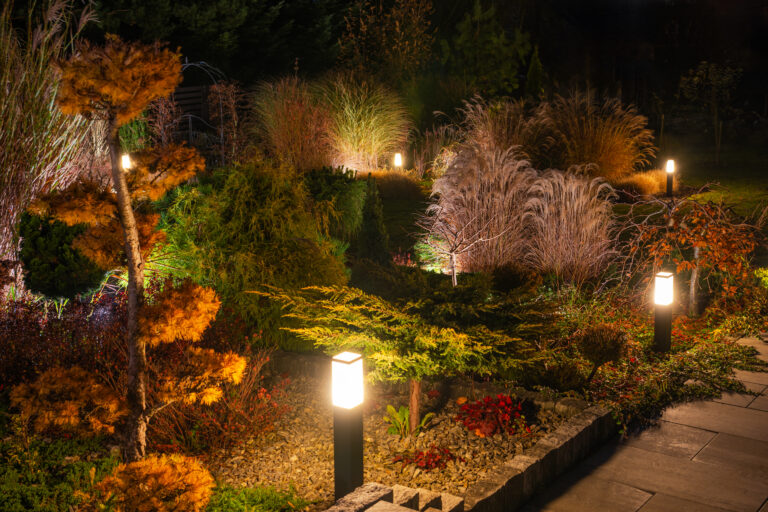
- Why Landscape Lighting Is More Than Decoration
- The Biggest Benefits of Landscape Lighting
- Different Types of Landscape Lighting
- Where Should Landscape Lighting Be Installed?
- LED vs. Traditional Landscape Lighting
- What Affects Landscape Lighting Costs?
- Common Landscape Lighting Mistakes
- Is Landscape Lighting Worth the Investment?
- Ready to Transform Your Backyard?
Why Landscape Lighting Is More Than Decoration
Many homeowners think outdoor lighting is simply an aesthetic upgrade.
In reality, it’s one of the few home improvements that improves both appearance and functionality at the same time.
A professionally designed lighting system creates a completely different experience once the sun sets.
Instead of losing your backyard every evening, you gain an outdoor space that remains inviting, comfortable, and usable well into the night.
Landscape lighting can:
- Extend outdoor entertaining hours
- Improve safety for family and guests
- Increase visibility around steps and walkways
- Highlight architectural details
- Showcase trees, gardens, and hardscaping
- Improve overall curb appeal
- Add perceived value to your home
Rather than viewing lighting as an optional accessory, many homeowners consider it the finishing element that brings an entire landscape design together.
The Biggest Benefits of Landscape Lighting
Improved Safety
One of the primary reasons homeowners install landscape lighting is safety.
Proper illumination helps reduce the risk of trips and falls by making important areas easier to navigate after dark.
Common locations include:
- Walkways
- Driveways
- Stairs
- Patios
- Entryways
Strategically placed lighting allows guests and family members to move around confidently without relying solely on porch lights.
Better Security
A well-lit property can also discourage unwanted activity.
While landscape lighting isn’t a replacement for a security system, eliminating dark corners and improving visibility around entrances creates a more secure environment.
Motion lighting can also be incorporated in specific areas where additional visibility is desired.
Increased Curb Appeal
Outdoor lighting dramatically changes how a home looks at night.
Instead of appearing flat and dark, the property gains depth, warmth, and architectural interest.
Professional lighting can emphasize:
- Stone features
- Decorative walls
- Trees
- Water features
- Entryways
- Garden beds
The result is a home that feels more inviting and visually impressive.
More Enjoyable Outdoor Living
A backyard shouldn’t only be used during daylight hours.
Landscape lighting allows homeowners to enjoy:
- Family dinners outdoors
- Evening gatherings
- Fire pit conversations
- Outdoor kitchens
- Relaxing on the patio after work
By extending the usable hours of your outdoor space, lighting increases the overall enjoyment of your investment.
Higher Property Value
Although every real estate market is different, professionally designed outdoor living spaces often leave a strong impression on potential buyers.
Landscape lighting contributes to:
- Better first impressions
- Enhanced outdoor functionality
- A premium appearance
- Greater perceived quality
When combined with hardscaping and landscaping, lighting helps create a cohesive outdoor environment that adds long-term value.
Different Types of Landscape Lighting
Every backyard has unique features that deserve different lighting techniques.
Choosing the right fixtures is just as important as choosing the right plants or patio materials.
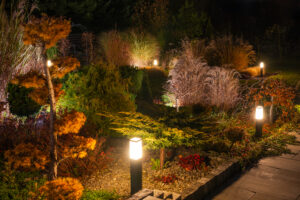
Path Lights
Path lights provide gentle illumination along:
- Walkways
- Garden paths
- Driveways
- Side yards
Their primary purpose is improving visibility while creating a welcoming atmosphere.
Spotlights
Spotlights direct concentrated beams of light toward a specific feature.
They’re commonly used to highlight:
- Large trees
- Architectural details
- Decorative stonework
- Water features
When positioned correctly, spotlights create dramatic visual impact without overwhelming the landscape.
Uplighting
Uplighting places fixtures at ground level and directs light upward.
This technique emphasizes height and texture, making trees, columns, and stone walls stand out beautifully after dark.
It’s one of the most popular techniques used in professional landscape lighting design.
Downlighting
Instead of shining upward, downlighting positions fixtures higher and directs light downward.
Often installed in trees or structures, this creates a soft moonlight effect that feels natural and elegant.
Step & Deck Lighting
Integrated lighting installed into:
- Stairs
- Retaining walls
- Decks
- Seating walls
These fixtures improve both safety and aesthetics while maintaining a clean, modern appearance.
Accent Lighting
Accent lighting draws attention to the landscape’s most attractive features.
Examples include:
- Sculptures
- Garden beds
- Decorative planters
- Fountains
- Feature walls
The goal isn’t to illuminate everything equally—but to guide the eye toward focal points throughout the property.
Professional Tip
The best landscape lighting designs don’t make homeowners notice the fixtures.
They make people notice the landscape.
A successful lighting plan creates balance, depth, and subtle contrast rather than flooding the entire yard with bright light.
Where Should Landscape Lighting Be Installed?
One of the biggest mistakes homeowners make is assuming that every part of the yard needs to be illuminated equally.
The goal of landscape lighting isn’t to make your property as bright as possible.
It’s to create balance, improve visibility, and guide the eye toward the most important features of your outdoor space.
Professional lighting designers carefully layer different types of lighting throughout the property to achieve a natural and elegant result.
Walkways
Walkways are one of the first areas that should receive lighting.
Proper pathway lighting helps:
- Improve nighttime visibility
- Prevent trips and falls
- Guide visitors safely to your entrance
- Create an inviting first impression
Rather than placing lights every few feet, professionals typically stagger fixtures to create a softer, more natural effect.
Patios
Your patio is often the center of outdoor living.
Whether you’re hosting friends, enjoying dinner with family, or relaxing after work, proper lighting allows you to continue using the space well after sunset.
Popular patio lighting includes:
- Low-voltage accent lighting
- Overhead string lighting
- Integrated wall lighting
- Step lighting
- Decorative uplighting around surrounding landscaping
When layered correctly, these elements create a warm and comfortable environment instead of harsh, direct illumination.
Entryways
Your home’s entrance creates the first impression.
Landscape lighting around entryways should make guests feel welcomed while also improving visibility and security.
Lighting can be used to emphasize:
- Front doors
- Stone columns
- Architectural details
- Planters
- Address numbers
The result is a cleaner, more upscale appearance from the street.
Trees & Garden Beds
Trees become dramatic focal points when illuminated correctly.
Large specimen trees, ornamental trees, and textured trunks can completely transform the nighttime appearance of a landscape.
Garden beds also benefit from carefully placed accent lighting that highlights:
- Flower beds
- Shrubs
- Decorative grasses
- Seasonal color
- Landscape boulders
Instead of lighting every plant equally, professionals typically select a few focal points to create depth and contrast.
Retaining Walls
Retaining walls are both functional and decorative.
Integrated lighting installed beneath wall caps or within the wall structure adds:
- Safety
- Architectural interest
- Better nighttime visibility
- Premium appearance
This type of lighting pairs especially well with paver patios and outdoor living areas.
Outdoor Living Spaces
If you’ve invested in features such as:
- Fire pits
- Outdoor kitchens
- Seating walls
- Pergolas
- Covered patios
lighting should be included as part of the overall design—not treated as an afterthought.
These spaces are designed to be enjoyed during evenings, making lighting one of the highest-value additions to the project.
LED vs. Traditional Landscape Lighting
Today’s professional landscape lighting systems almost always use LED technology—and for good reason.
While traditional halogen systems were once common, modern LED fixtures offer significant advantages in efficiency, longevity, and maintenance.
LED Lighting
Advantages include:
- Lower energy consumption
- Longer lifespan
- Minimal maintenance
- Consistent brightness
- Better weather resistance
- Available in multiple color temperatures
Many high-quality LED fixtures can last for years before needing replacement, making them a smart long-term investment.
Traditional Halogen Lighting
Although halogen lighting can produce warm illumination, it generally requires:
- More electricity
- More frequent bulb replacement
- Higher maintenance
- Greater long-term operating costs
For most homeowners, LED systems provide better overall performance and lower ownership costs.
What Affects Landscape Lighting Costs?
Every landscape lighting project is different.
Rather than focusing on a single price, it’s more useful to understand what influences the overall investment.
Property Size
Larger properties require:
- More fixtures
- Longer cable runs
- Larger transformers
- Additional installation time
Number of Fixtures
A simple front yard may only require a handful of fixtures.
A complete backyard transformation with patios, walkways, retaining walls, trees, and garden beds will naturally require a more comprehensive lighting design.
Fixture Quality
Not all fixtures are built the same.
Professional-grade fixtures generally offer:
- Better materials
- Improved weather resistance
- Longer lifespan
- More consistent light output
Higher-quality fixtures often reduce maintenance costs over time.
Design Complexity
Simple lighting layouts are faster to install.
Projects that integrate lighting into:
- Hardscaping
- Retaining walls
- Steps
- Outdoor kitchens
- Water features
require additional planning but create a much more polished final result.
Existing Landscape
Lighting is often easiest to install during a new landscape project.
However, professionally designed systems can also be added to existing patios, gardens, and outdoor living spaces with minimal disruption.
Common Landscape Lighting Mistakes
Even beautiful landscapes can look disappointing if lighting isn’t planned correctly.
Here are some of the most common mistakes professionals encounter.
1. Using Too Much Light
More light doesn’t necessarily create a better design.
Over-lighting can make a landscape feel harsh instead of inviting.
2. Ignoring Walkways
Homeowners sometimes focus entirely on decorative lighting while forgetting the areas people actually use.
Safe access should always come first.
3. Choosing the Wrong Color Temperature
Cool blue lighting can make landscapes feel cold.
Most residential projects benefit from warmer color temperatures that create a welcoming atmosphere.
4. Installing Fixtures Without a Plan
Randomly placing fixtures rarely produces professional results.
Lighting should be designed as a complete system rather than added one fixture at a time.
5. Forgetting Future Plant Growth
Trees and shrubs grow.
Lighting should be positioned with future growth in mind to avoid blocked fixtures and uneven illumination.
6. Mixing Too Many Fixture Styles
Consistency creates elegance.
Using several unrelated fixture styles can make even expensive landscapes look cluttered.
7. Trying to Illuminate Everything
Professional lighting creates focal points—not uniform brightness across the entire property.
Strategic contrast is what makes a landscape visually interesting after dark.
Is Landscape Lighting Worth the Investment?
For many homeowners, the answer is yes.
Landscape lighting isn’t simply another decorative feature—it enhances how your property looks, feels, and functions every evening.
It improves safety, extends the use of outdoor living spaces, highlights your landscaping investment, and creates a more inviting atmosphere for family and guests.
When combined with professionally designed landscaping, hardscaping, and irrigation, outdoor lighting becomes the finishing detail that ties the entire project together.
If you’re already investing in your backyard, adding landscape lighting during the planning stage is often more efficient than retrofitting it later.
Ready to Transform Your Backyard?
Whether you’re building a new outdoor living space or upgrading an existing landscape, professionally designed lighting can dramatically improve both beauty and functionality.
At Terra Garden Svcs, we design complete outdoor environments—from hardscaping and irrigation to custom landscape lighting—built for Spokane’s climate and your lifestyle.
Request an estimate today and discover how the right lighting can transform your backyard after sunset.